If you’ve ever stood next to a box fan resting on the floor versus one mounted 10 feet up on a wall, you’ve probably noticed a difference in how much air it moves and how evenly it spreads. As a fan impeller supplier, I talk to HVAC technicians, industrial plant managers, and custom ventilation designers every week who are struggling to get their airflow systems to perform as promised—more often than not, the problem isn’t the impeller itself, it’s where and how that impeller is installed. Over 12 years in this business, I’ve seen countless projects go off the rails because someone cut corners on installation positioning, and I’ve also seen how a small adjustment can turn a mediocre setup into one that hits its efficiency, noise, and durability targets perfectly. Today, I want to break down exactly how installation position shapes a fan impeller’s performance, share a few real-world stories from my work, and explain why it matters as much as the impeller’s design when you’re building or updating a ventilation system. Fan Impeller
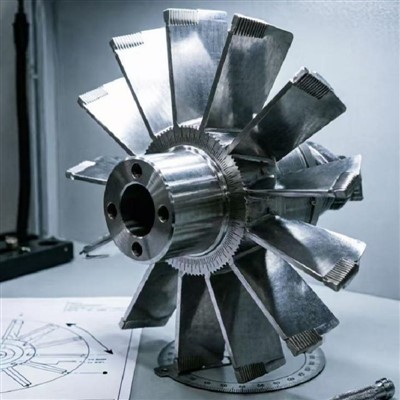
Let’s start with the basics: a fan impeller doesn’t work in a vacuum. Its blades spin to move air, but that air doesn’t just appear out of thin air—it has to flow through inlet ducts, past fittings, and into the impeller’s eye (the central opening where air enters) before it gets pushed out through the outlet. Any obstacle or gap at that inlet is like putting a kink in a hose: it restricts flow, forces the impeller to work harder, and can even cause uneven wear over time. One of the most common mistakes I see is installing an impeller too close to a wall or another object that blocks its inlet. A few months back, I worked with a manufacturing plant that installed a backward-curved impeller (the go-to for high-static-pressure HVAC systems) just 2 inches away from a side wall to save space in their cramped equipment room. Within three months, their energy bills had jumped 18%, and the impeller’s vibration readings were 3x the normal level. When their maintenance team finally checked, they realized the wall was disrupting the air coming into the impeller’s eye. Air that enters the impeller has to have a uniform velocity—meaning every part of the blade sees air moving at roughly the same speed. Blocking one side creates a velocity gradient: one part of the blade is pushing against fast, undisturbed air, while the other is fighting slow, turbulent air. That uneven force makes the impeller wobble, wastes energy, and shortens its lifespan. We had them move the impeller to a position at least 6 inches away from all surrounding solid surfaces on the inlet side, and within a month, their energy use dropped back to expected levels, and vibration stabilized.
It’s not just distance from solid objects, either—ductwork layout around the impeller’s inlet is a make-or-break factor too. A lot of designers default to straight duct runs for inlets, but when space is tight, they often add 90-degree elbows right before the impeller. That elbow creates swirling, uneven airflow that hits the impeller at an angle, a condition we call “inlet swirl.” If the impeller isn’t designed to handle that swirl, it has to work extra to straighten out the airflow, which kills efficiency and boosts noise. Last year, a commercial office building’s HVAC contractor reached out because their new air handling unit was only delivering 70% of the rated airflow, even though the impeller was exactly the model they’d specified. The issue: they’d installed two 90-degree elbows just 12 inches upstream of the impeller, with no straight section to let the airflow settle. We recommended adding a 24-inch straight duct section between the elbows and the impeller, or adding an inlet straightener (a simple grid of small ducts that aligns airflow) right before the impeller’s eye. After that adjustment, the airflow jumped to 95% of the rated level, and the unit’s noise level dropped by 3 decibels—enough that occupants stopped complaining about the hum near the office windows.
Now, what about the outlet side of the impeller? That’s where the air is pushed out into the duct system, so the position here affects how well that air transitions from the impeller’s discharge to the rest of the system. I see two common mistakes on the outlet: installing the impeller too far away from the outlet duct opening, or mismatching the impeller’s outlet size to the duct. For example, a forward-curved impeller (used for low-pressure, high-volume applications like residential furnaces) has a wider outlet than backward-curved models, but if you mount it so that the duct is only connected to the very edge of the impeller’s discharge, you’re wasting up to 20% of the airflow. A restaurant client came to me last winter because their commercial kitchen ventilation wasn’t pulling out grease and fumes fast enough, even with a brand-new impeller. Their setup had the impeller mounted on a flange that only covered the outer 60% of the impeller’s discharge, leaving the inner 40% of the airflow to hit the empty space of the equipment room instead of going into the duct. We repositioned the duct to match the full diameter of the impeller’s outlet, and the kitchen’s ventilation rate jumped enough that they were able to run their system at a lower fan speed, cutting their monthly energy bill by $120. That’s the thing about outlet positioning: it’s easy to overlook because it’s not as visible as the inlet, but the airflow you “lose” here is direct waste of both energy and the impeller’s intended performance.
Another often-overlooked position factor is elevation—how high or low you mount the impeller. This matters most in systems that move air with different temperatures, like industrial exhaust or HVAC units that handle air with variable density. Hot air is less dense, so it rises, while cold air sinks. If you mount an impeller designed to move hot exhaust too low, it’s pulling in denser, cooler air from the bottom of the duct, meaning it’s working harder to move the same volume of hot air. Conversely, if you mount a cold-air impeller too high, it might pull in warm, less dense air that doesn’t provide enough cooling for the impeller’s lubrication. I had a steel mill client who installed a high-temperature radial impeller for their furnace exhaust, and they mounted it 3 feet above the duct’s floor. Within six months, the impeller’s bearings were failing at twice the expected rate, and their exhaust volume was 15% lower than specified. When we inspected, we found that the impeller was pulling in cooler, denser air from the bottom of the duct, which created extra load on the bearings (bearing life is directly tied to how evenly the impeller pulls air and the temperature of the air it’s moving). We raised the impeller to 10 feet above the duct floor, where the hot exhaust concentrated, and bearing failure rates dropped to normal levels, plus their exhaust volume returned to the rated specification. That’s a perfect example of how elevation isn’t just about space—it’s about matching the impeller’s position to the properties of the air it’s moving.
Position also ties directly to noise, which is a huge concern for both commercial and residential users. A fan impeller’s noise comes from two places: the vibration of the blades themselves and the turbulence in the air. If you mount an impeller too close to a rigid surface, like a metal duct wall or a ceiling, that surface acts like a sounding board, amplifying the noise. I worked with a residential homeowner who had a bathroom vent fan that was so loud it made their bedroom windows rattle at night. The contractor had mounted the impeller only 1 inch away from the ceiling’s drywall, and the drywall was transferring every bit of the impeller’s vibration into the room. We recommended mounting the impeller on rubber vibration isolators (a small add-on that fits between the impeller housing and the mounting bracket) and moving it at least 3 inches away from the ceiling. The noise dropped by half, and the homeowner told me later they could no longer hear the fan from their bedroom at night. Even for industrial systems, noise isn’t just a comfort issue—many OSHA regulations limit worker exposure to fan noise, so positioning that reduces noise can also help businesses avoid compliance fines.
I know a lot of people think that as an impeller supplier, I just want to sell you a new impeller, but the truth is, most of the time the issue isn’t the part itself. I’ve had clients come to me thinking they need a larger, more powerful impeller, only to realize a $50 adjustment to position saves them thousands in energy and maintenance costs. That’s why I always take time to ask about installation position when a client reaches out for a quote—because an impeller is only as good as its position in the system. For example, a backward-curved impeller that’s perfectly mounted will deliver 90% efficiency, but if it’s positioned with a bad inlet, that efficiency can drop to 70%, which is a huge difference over the lifespan of the impeller.
So what does this mean for anyone working with fan impellers? First, don’t cut corners on inlet and outlet clearance. The general rule of thumb is to leave at least 50% of the impeller’s diameter as clearance on all sides of the inlet, and at least 25% of the diameter as clearance on the outlet, unless you’re working with a compact, low-static system. Second, pay attention to duct layout around the impeller: add straight duct runs or inlet straighteners if you have to turn elbows near the impeller, to avoid inlet swirl. Third, match elevation to the air you’re moving—hot air impellers go higher, cold air impellers stay lower, and make sure you’re not pulling air from areas that will create uneven density. Fourth, don’t ignore vibration: isolate the impeller from rigid mounting surfaces to reduce noise and wear.

If you’re in the process of designing or updating a ventilation, HVAC, or industrial exhaust system, and you’re not sure if your impeller’s position is right, don’t guess. I’ve worked with hundreds of clients to adjust installation positions and get their systems performing as intended, and I can help you troubleshoot your setup, whether you’re dealing with high energy bills, low airflow, noise, or frequent impeller failures.
Impeller References
ASHRAE Handbook—HVAC Systems and Equipment. American Society of Heating, Refrigerating and Air-Conditioning Engineers, 2021.
Fan Engineering Handbook. 5th ed., The Air Movement and Control Association International, 2018.
OSHA Technical Manual: Ventilation. Occupational Safety and Health Administration, U.S. Department of Labor, 2020.
Shandong Shunye Stainless Steel Co., Ltd.
Shandong Shunye Stainless Steel Co., Ltd. is one of the most professional fan impeller manufacturers and suppliers in China, also supports customized service. Welcome to buy bulk cheap fan impeller made in China here and get quotation from our factory. For price consultation, contact us.
Address: Shandong Province, Binzhou City, Wudi County, Liubao Town, Zhangdong Road, Duliucun Village
E-mail: sales@wdshunye.com
WebSite: https://www.shunyecasting.com/
