If you’ve ever stood in a warehouse or a job site, staring at a stack of EPDM hoses and wondering how much each linear foot actually weighs, you’re not alone. As an EPDM hose supplier, this question comes up at least once a week—from plumbers calculating how much weight their truck can haul, to HVAC contractors designing ductwork systems, to manufacturing engineers mapping out material costs for new machinery. A lot of people assume hose weight is just a number pulled from a spec sheet, but there’s actual science to it, and getting it wrong can lead to everything from overspending on shipping to safety issues on a job. Let’s break this down, straight from someone who’s been working with EPDM hoses for over a decade, no jargon, no fluff. EPDM Hose
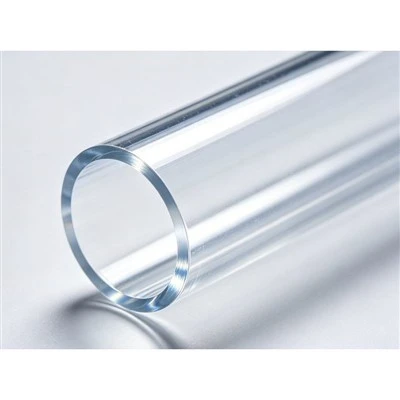
First, let’s start with what EPDM even is, because that’s the foundation. EPDM stands for Ethylene Propylene Diene Monomer, a synthetic rubber super popular for hoses because it’s resistant to UV light, extreme temperatures (from -40°F to 300°F, depending on the blend), ozone, and mild chemicals—way more durable than natural rubber or even some other synthetics. It’s not one single material, though. EPDM compounds get mixed with different fillers, plasticizers, and reinforcing layers, and that’s where the weight changes. When someone asks “how much does EPDM hose weigh per foot,” they’re almost never asking about a plain, unlined rubber tube. Almost every EPDM hose used commercially has at least one reinforcement layer, usually polyester or nylon cord, and sometimes a wire helix for kink resistance or rigidity. That reinforcement is non-negotiable for most applications, so we can’t ignore it.
Let’s get to the core of the math here, no complex equations, just real-world numbers we use every day. Weight per foot of a hose depends on three main factors: the outer diameter (OD) of the hose, the inner diameter (ID, which is what carries the fluid or air), and the thickness of the wall, plus the type and amount of reinforcement. Wall thickness is usually measured in millimeters, but most customers in the US think in inches, so I’ll switch back and forth to keep it clear.
For example, take a common ½-inch ID EPDM hose, the kind plumbers use for water lines or irrigation. A standard version here has an OD of about ¾ inch, and a wall thickness of ⅛ inch (that’s 3.175 mm). It’s reinforced with a single layer of polyester cord. How much does this weigh per foot? Let’s run the numbers: the volume of rubber and reinforcement per linear foot is roughly 0.025 cubic feet, and the density of EPDM (with standard fillers) is about 70 pounds per cubic foot. Add the small amount of polyester reinforcement, and that works out to right around 0.7 to 0.8 pounds per foot. That sounds light, but when you’re talking about a 100-foot roll, that’s 70 to 80 pounds—enough to notice when you’re hauling it up a ladder or loading it into a work van.
Now scale that up to a 2-inch ID EPDM hose, used for commercial HVAC condensate lines or industrial fluid transfer. That hose has an OD of about 2 and ⅝ inches, wall thickness of 5/16 inch, and two layers of polyester reinforcement (since it needs to hold pressure up to 150 PSI). This one’s way heavier: around 3.2 to 3.5 pounds per foot. A 50-foot roll of that is 160 to 175 pounds—you can’t lift that alone, which is why we always recommend customers bring a hand truck for large hose sizes. I’ve had customers show up to pick up a 4-inch ID hose and try to heft a 25-foot roll themselves, and it’s a struggle—those are around 8 pounds per foot, so 200 pounds for 25 feet. It’s not just about bulk here; the weight directly impacts logistics: shipping costs go up as weight increases, and on a job site, you need to plan for how to move and install it without straining your team or damaging the hose.
But wait, not all EPDM hoses are the same. Some are lighter-duty, like the thin-walled ones used for garden hose attachments or low-pressure ducting. A ¾-inch ID light-duty EPDM hose might have a wall thickness of only 1/16 inch, no reinforcement or a very thin single layer, and weigh just 0.3 pounds per foot. That’s the kind you can wrap around your wrist, no problem. On the other end, we make heavy-duty EPDM hoses for mining equipment and fire suppression, which have multiple steel wire helixes and extra thick walls. A 6-inch ID heavy-duty EPDM hose can weigh up to 15 pounds per foot—now that’s a serious piece of equipment. That weight is intentional, though; the wire helix keeps it from collapsing under vacuum, and the thick wall resists abrasion from rough surfaces in mines or construction sites.
I mentioned density earlier, and that’s a key point because not all EPDM compounds have the same density. A higher-quality EPDM compound, with more pure rubber and fewer cheap fillers (like calcium carbonate, which is sometimes added to cut costs), has a slightly higher density, so it’s a tiny bit heavier, but it’s also more durable and lasts longer. I’d rather sell a hose that’s 0.1 pounds heavier per foot but lasts 5 years than one that’s 0.1 pounds lighter that cracks after 6 months. The fillers also affect flexibility, by the way—high-fill EPDM hoses are stiffer, so they might feel heavier when you’re handling them even if the spec sheet says the same weight. That’s why we always tell customers to consider both the published weight and how the hose performs in their specific use case.
Another common question we get: does fluid inside the hose add to the weight? Absolutely, but that’s usually not what people mean when they ask about hose weight per foot. The dry hose weight is what you use for shipping and inventory, but if you’re filling that hose with water, for example, water weighs 8.34 pounds per gallon. A 1-inch ID hose has a volume of about 0.0054 gallons per linear foot, so water adds about 0.045 pounds per foot—hardly noticeable. A 6-inch ID hose has 0.196 gallons per foot, so that adds almost 1.6 pounds per foot of water weight. That’s a big difference for large hoses running long distances; if you have a 100-foot 6-inch EPDM hose full of water, that’s 160 pounds of extra weight on the fittings and the supports, which you have to account for when designing a system.
Let’s talk about how we measure this at our warehouse, because this isn’t just theory. When a customer orders a custom length of EPDM hose, we cut a 1-foot sample from the same batch as their order, weigh it on a calibrated digital scale, and record that weight for our records. We don’t just go by the spec sheet—manufacturing can have small variations, so we adjust based on the actual sample. For standard sizes, we keep a chart posted in our loading bay that has the average weight per foot for every common EPDM hose we stock, but we always tell customers to double-check if their application is critical. For example, a customer working on a roof might need to know the exact weight to figure out if the hose will put too much stress on the HVAC unit, so we give them the actual sample weight instead of the average.
I’ve seen mistakes happen when people rely on generic weight numbers instead of specific ones. A few years back, a plumbing contractor ordered 500 feet of 1-inch EPDM hose for a large residential development. He used a generic 0.5 pounds per foot number to calculate shipping, but the actual weight of our hose (which had a single layer of polyester reinforcement) was 0.7 pounds per foot. That added 100 pounds to his total shipment, and he ended up paying extra in shipping fees—something he never would have predicted if he didn’t ask the actual supplier for the right number. Another time, an engineer tried to design a hose rack for a manufacturing line using a generic 2-inch EPDM weight, and the rack collapsed because he used a lighter weight that didn’t account for the extra steel reinforcement the hose required. That cost him a day of downtime and a new rack—all because of a wrong weight number.
So, to sum up the real numbers, no fluff, for common EPDM hose sizes (dry weight, linear foot, standard reinforced versions):
- ¼ inch ID: 0.25 to 0.35 lbs/ft
- ½ inch ID: 0.5 to 0.8 lbs/ft
- ¾ inch ID: 0.8 to 1.2 lbs/ft
- 1 inch ID: 1.1 to 1.6 lbs/ft
- 2 inch ID: 3.0 to 3.8 lbs/ft
- 4 inch ID: 6.5 to 8.5 lbs/ft
- 6 inch ID: 12 to 15 lbs/ft
These are average ranges, and they’ll shift a little based on wall thickness, reinforcement type (polyester vs. nylon vs. steel), and EPDM compound. If you need a precise number for a specific order, application, or quote, the best thing to do is reach out to a supplier that specializes in EPDM hoses, not a general hardware store. We don’t just sell hoses—we know their specs, their weights, and how they perform in different environments, so we can give you the exact number you need.
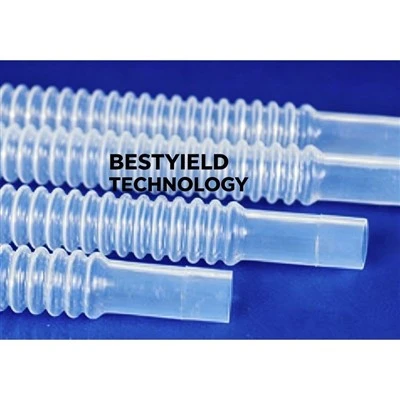
At the end of the day, the weight of EPDM hose per foot isn’t just a random spec. It impacts shipping costs, installation logistics, system design, and even how long your hose will last. Too often, people treat it like a trivial number, but when you’re on a job site or managing a project, every pound counts. If you’re working on a plumbing job, HVAC system, industrial fluid transfer, or any project that uses EPDM hose, don’t guess at the weight—reach out to us to get the accurate numbers you need. We can help you pick the right size, confirm the exact weight for your order, and make sure you have all the details to keep your project on track and on budget.
UPE Hose References:
- Modern Rubber Compounding: Properties, Processing, and Applications, 2nd Edition
- Hose Products Division Technical Manual, EPDM Hose Specifications 2022
- ASTM D2000 – Standard Classification System for Rubber Products in Automotive Applications
- Industrial Hose and Fittings Association (IHFA) Weight and Dimension Guidelines for Rubber Hoses
BESTYIELD Technology (Huizhou) Co., Ltd.
BESTYIELD Technology (Huizhou) Co., Ltd. is one of the most professional epdm hose manufacturers and suppliers in China, featured by quality products and good price. Please rest assured to buy durable epdm hose made in China here and get quotation from our factory. Customized orders are welcome.
Address: Yinshan Industrial Zone, Liangjing Town, Huiyang District, Huizhou City, Guangdong Province
E-mail: rick@bestyield.net
WebSite: https://www.bestyield.org/
