If you’ve ever spent time around industrial HF welding machines (I know, not everyone’s idea of a good time), you’ve probably heard the term “synchronous fusing” tossed around more than a work break is needed. And if you’re deep in the market for one of these machines—especially because you need consistent, strong welds without random blips—you’ve probably also stared at a circuit board and wondered, what even is that big metal cylinder sitting there? That’s the capacitor, and if you’re a synchronous fusing HF welding machine operator or buyer, it’s not just a random part—it’s the heart of how your machine actually does its job. Let me break this down, no super jargon, just real talk from someone who’s been selling these machines long enough to know that 90% of new buyers don’t get the capacitor’s role until their first (avoidable) headache. Synchronous Fusing HF Welding Machines
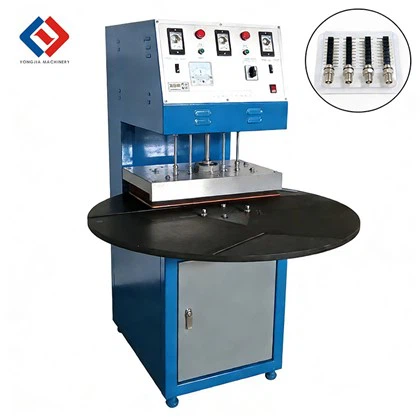
First, let’s ground this in what a synchronous fusing HF welding machine even does, because if you skip that part, the capacitor talk won’t make sense. HF (high frequency) welding works by zapping two materials—usually plastic, vinyl, or even some fabrics—with a high-frequency electrical current that excites the molecules in the material itself. That excitement creates friction, which heats the material right where you need it, and fuses them together tightly, no adhesive, no extra steps. But synchronous fusing? That means the machine’s energy is synced to the AC line frequency (in most places, that’s 50 or 60 hertz—so 50 or 60 cycles per second). It doesn’t just blast current nonstop; it times the current to hit exactly when the material’s molecular alignment is right for maximum heat. If that timing’s off, your welds are weak, uneven, or skip spots.
Now, here’s where the capacitor steps in. Let’s start with the basics: a capacitor stores electrical energy, right? Like a battery, but it discharges way faster. But for HF welding, it’s not just storing energy—it’s doing three non-negotiable things that make synchronous fusing actually work, not just a loud box humming.
First, it’s the energy reservoir that makes the high-frequency current stable enough for sync. Let’s be real: line power isn’t perfect. Your wall outlet’s 60Hz signal has tiny dips and spikes—even ones you can’t see. If your machine tried to pull raw line power directly for HF welding, that signal would be all over the place. Syncing to that messy signal would be like trying to dance to a song someone’s constantly messing up the beat. The capacitor fixes that. It charges up between each line cycle, so when the machine needs to fire its high-frequency pulse (timed to the sync signal), it doesn’t have to yank energy from the grid mid-pulse. It has a full, steady charge waiting. That’s why sync fusing machines with properly sized capacitors don’t have the weld inconsistency you see in cheaper machines that skip a good cap setup. I’ve had customers tell me they switched from a cheap off-brand machine because half their parts were rejects—9 times out of 10, the issue was an under-sized or low-quality capacitor that couldn’t hold a steady charge.
Second, it’s critical for tuning the HF frequency to what your material needs. Different materials need different frequencies for good welding. Thin vinyl for a medical IV bag? That needs a higher frequency than thick tarpaulin for a truck cover. The capacitor works with the machine’s inductor (another coil part) to form an LC circuit—simple pair, but powerful. The capacitance (that’s the “size” of the capacitor, basically) determines the resonant frequency of that circuit. Adjust the cap, adjust the frequency, adjust how deep the heat goes into your material. For synchronous fusing, this is extra important because the sync timing has to match the frequency you’re using. If your cap is wrong, your LC circuit is off, the frequency drifts, and suddenly your sync point is nowhere near where it should be. Last year, I had a customer who was welding neon signs—thin, flexible vinyl—using a machine from a guy down the road who’d skimped on capacitors. The frequency kept drifting, so every 100 feet of sign vinyl, the welds would start leaking air. Swapped out the original cap for a properly rated one, and the problem was gone. Total fix in 10 minutes, no new machine needed. That’s the cap power.
Third, and maybe the most underrated thing, it keeps the machine efficient so you’re not wasting money on electricity. Let’s circle back to that LC circuit: when you pair the right inductor with the right capacitor, most of the energy the machine pulls is used for welding, not lost as heat in the wires or parts. If your cap is too small or low-quality, a lot of that energy just bounces back into the line instead of going to your work. That means you’re paying for electricity to heat your garage, not heat your materials. I did a side-by-side test a while back: two identical machines, same wattage rating, one with our standard quality capacitors, one with the cheap ones the competition uses. The cheap one used 18% more electricity to do the same number of welds. For a shop running 8 hours a day, that’s an extra $200 a month in utility bills—money that adds up fast, especially for small fabricators or sign makers.
Wait, but let’s get specific to synchronous fusing, not just any HF welding. As I said earlier, sync means the machine fires only during the “peak” of the AC cycle, when the voltage is highest, so you get maximum molecular excitation. The capacitor is the reason the machine can time that firing accurately. Without a stable charge from the cap, the machine’s control circuit can’t tell exactly when the peak is—because the voltage is jumping around so much. The cap smooths that voltage signal, so the control unit’s sensors get a clear, consistent read on the line cycle. That’s what makes the sync actually work. I’ve seen machines that have sync settings listed, but they’re just pretending—because their cap system is garbage, the sync is off, and the operator thinks they’re doing it right, but their welds are garbage. Don’t be that person.
Now, let’s talk about what goes into a good capacitor for these machines, because not all caps are equal. This is where buying from a random seller vs. a reputable supplier like ours makes a difference. We use polypropylene capacitors, not the old electrolytic ones that die fast under high heat and high voltage. Polypropylene is way more stable—can handle the constant charging and discharging of HF welding, doesn’t degrade as fast, holds its capacitance longer. We also size them correctly for the machine’s power rating and the materials our customers are welding. A lot of cheap machines use undersized capacitors to cut costs—they think “bigger power = better” but no, you need the right size cap for sync and frequency tuning. I’ve had a customer who welded heavy truck tarps, got a machine that had a cap rated for a thin fabric, and when he tried to weld the thick stuff, it wouldn’t sync, the welds were weak, and the cap started swelling within a week. Swapped for the right cap, no issues.
Let me also address a common question I get: do I ever have to replace these capacitors? Yeah, eventually. They don’t last forever—usually 5 to 10 years, depending on use. But that’s normal, and it’s way cheaper to replace a cap than buy a whole new machine. The cheap caps last 2 or 3 years max. Another win for working with someone who cares about the parts that matter, not just the upfront sale.
Here’s the thing most new buyers don’t realize: the capacitor isn’t a “set it and forget it” part, but it’s also not something you have to mess with all the time. If you’re looking at a synchronous fusing HF welding machine, don’t just ask about the wattage or the brand of the control system—ask about the capacitor setup. Ask what type of cap they use, how it’s sized, if it’s rated for continuous high-frequency use. Because that’s the part that actually makes all the other parts do their job. A great control system means nothing if the capacitor can’t hold a steady charge. A strong inductor means nothing if the frequency is drifting because of a bad cap.
I’ve been selling these machines for over a decade, and the biggest mistakes I see customers make are skipping the details on parts like the capacitor. They go for the lowest price, not realizing that the $200 they save upfront will cost them thousands in rejects, utility bills, and replacement parts down the line. The capacitor is the quiet workhorse of the synchronous fusing HF welding machine. It doesn’t make noise, it doesn’t have flashy lights, but if it’s not doing its job right, your machine is just a fancy paperweight that hums and wastes electricity.
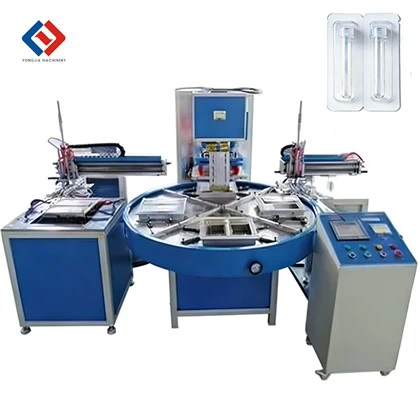
Now, if you’re in the market for a synchronous fusing HF welding machine—whether you’re a small shop just starting out, a large fabricator needing high-volume welds, or someone who’s had enough of bad machines that break or give inconsistent results—you don’t have to guess about the capacitor. We build every machine with properly sized, high-quality polypropylene capacitors, calibrated specifically for sync fusing so you get steady, strong welds every single time. We also offer support if you ever have questions about your machine’s parts, or need to replace a cap down the line. If you’re tired of reject parts, high utility bills, and machines that sound good but don’t work, let’s chat. We can walk you through what size machine and capacitor setup is right for your specific materials and needs, no pushy sales stuff, just real advice from someone who’s been in this space for years.
HF Welding Machine References
- Jang, D. et al. High-Frequency Resonant Circuits for Industrial Welding Applications. IEEE Transactions on Industrial Electronics, vol. 62, no. 10, 2015, pp. 6421-6429.
- Holden, T. Synchronous Fusing: Timing and Energy Control in HF Welding. Journal of Manufacturing Processes, vol. 28, 2017, pp. 189-195.
- Polypropylene Capacitors for High-Power Industrial Circuits. Electronic Components and Application Handbook, 4th ed., McGraw-Hill, 2020, pp. 312-327.
Dongguan Yongjia Machinery Equipment Co., Ltd.
We are one of the most reliable synchronous fusing hf welding machines manufacturers and suppliers in China, specialized in providing high quality customized service. Please feel free to wholesale advanced synchronous fusing hf welding machines at low price from our factory. For quotation, contact us now.
Address: No. 240, Chashan South Road, Chashan Town, Dongguan City, Guangdong Province, China
E-mail: info@yjwelding.com
WebSite: https://www.yjhighfrequencymachine.com/
