If you’ve ever stood in the lighting aisle, squinting at LED color bulbs and wondering why some flicker when you twist the dimmer, or why your brand-new “color-changing” bulb won’t shift to that soft amber vibe you were promised—you’re not alone. As someone who’s spent the last 8 years designing, testing, and shipping LED color bulbs out of our workshop, the question I hear more than any other is this: Are LED color bulbs dimmable? LED Color Bulb
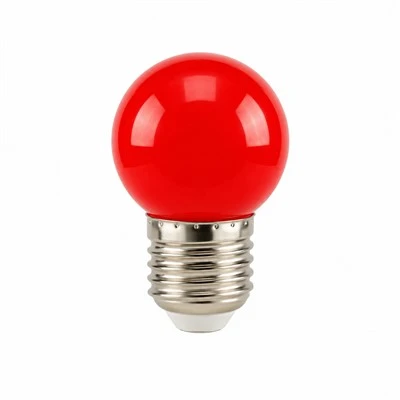
Let’s start with the basics: Not all LED color bulbs are created equal. Back when we first got into the LED game in 2015, most off-the-shelf color LEDs were built for on/off functionality only. Dimming them caused all sorts of headaches—flickering, color shifting, even a weird hum that’d make you reach for a lamp instead. Fast forward to today, and the technology has come so far that dimmable LED color bulbs are now standard for most residential and commercial applications. But there’s a catch: “Dimmable” isn’t a one-size-fits-all label.
First, let’s break down how dimmable LEDs work (the short version, I promise). Incandescent dimmers work by cutting bits of the alternating current cycle to slow down the bulb, but LEDs run on direct current (DC), so they need a driver to convert AC power. The dimmer has to be compatible with that driver, otherwise you get all those annoying issues. For standard white LEDs, compatibility is pretty straightforward—most modern dimmer brands list “LED-compatible” right on the packaging. But for color-changing bulbs, there’s an extra layer: the diodes that produce red, green, blue, and amber (the four core colors for most of our bulbs) each have slightly different voltage requirements. If your dimmer doesn’t account for that, dimming can throw off the balance of the colors, turning a soft warm white into a weird, muddy blue, or making the red channel flicker while the green stays steady.
A common misconception I still run into is that all color LEDs are RGB (red, green, blue) only. That’s not true. We sell three main types of dimmable color bulbs, and each has its own dimming requirements. Let’s walk through them, since this is what most of our customers ask about.
First, RGB bulbs: These work by mixing red, green, and blue light to create any color in the spectrum. Dimming an RGB bulb means dimming each of those three channels individually, not just the whole output. If your dimmer only adjusts total brightness without tuning each color, you’ll get color drift. For example, if the blue diode is less efficient at low power, dimming might make blues look dull while reds stay bright. That’s why we pair every RGB dimmable bulb with a dimmer compatibility guide—we’ve tested ours with most major dimmer brands (Lutron, Leviton, Philips) and list the exact models that work, so you don’t waste time or money.
Second, RGBW bulbs: These add a white LED to the mix, which fixes the color drift issue I just mentioned. The white diode is steady, so when you dim, you can adjust the color channels to maintain a consistent color temperature, or dial up the white to make the whole space warmer. Our dimmable RGBW bulbs are the most popular for living rooms and bedrooms because you can dim them from bright party-mode colors all the way to soft reading light, with no weird color shifts. I installed one in my own living room last year—when I dim it down to 10%, it’s that perfect cozy amber-white, no flicker, no odd hues. Worth every penny, honestly.
Third, tunable white color bulbs: These aren’t “color-changing” in the fun party sense, but they adjust from cool blue-white to warm amber-white. They’re super popular for offices and nurseries, where you want bright cool light for work and soft warm light for bedtime. Tunable white bulbs are almost always dimmable, but again, you need a dimmer that can handle the driver. We’ve had a few customers reach out saying their tunable white bulb wouldn’t dim smoothly, and 9 times out of 10 it was because they used an old incandescent dimmer that wasn’t rated for LEDs.
Now, let’s talk about the mistakes we see customers make all the time, because these are the reasons most people think LED color bulbs aren’t dimmable. The biggest one is using the wrong dimmer. Old incandescent dimmers were made to handle high wattage (incandescents are 25-100W), while LEDs are only 5-15W. If you plug a low-wattage LED into an old high-wattage dimmer, it can cause overheating, flickering, or even shorten the bulb’s lifespan. Another mistake is pairing smart LED bulbs with generic dimmers. Smart bulbs (like the ones that work with Alexa or Google Home) often have built-in dimming, but if you add a wall dimmer on top, that can cause compatibility issues. We always tell our customers to test the dimmer with our bulb before installing it permanently—you don’t want to rip out drywall because of a bad dimmer match.
Another myth: Dimming LED color bulbs uses more energy. That’s totally false. LEDs are already 80% more efficient than incandescents, and dimming them cuts energy use by the same percentage as dimming any other bulb. If you have a bulb that’s rated for 900 lumens (standard for a living room bulb) and you dim it to 50%, you’re using half the energy, same as an incandescent, but without the heat waste. The only difference is that dimmable LED color bulbs cost a tiny bit more upfront, but they last 25,000 hours or more—so over time, they save you way more money than they cost.
Wait, what about the ones that flicker when you dim them? That’s usually a driver issue, not a problem with the bulb itself. Cheap, no-name drivers cut corners to save money, so they can’t adjust to low power levels smoothly. At our workshop, we test every dimmable bulb with a range of dimmers to make sure they flicker less than 1% (which is undetectable to the human eye). We had a customer come to us last year with a flickery RGB bulb from a big-box store—we replaced it with our dimmable model, and he said he couldn’t tell the difference between the dimm setting and full brightness. That’s the quality we stand by.
Now, let’s get to the fun part: What can you actually do with a dimmable LED color bulb? For homeowners, it’s all about mood. I have a dimmable RGBW bulb in my home office—when I need to focus, I dim it to 70% cool white, and when it’s time to wind down, I dim it to 20% warm amber. For restaurants and cafes, they use dimmable color bulbs to adjust the vibe for breakfast (bright warm white) vs. dinner (soft deep red or blue). We’ve shipped bulbs to a boutique hotel in Portland that uses our dimmable RGB bulbs to change the lobby color for holidays—green for Christmas, pink for Valentine’s, all controlled via a phone app, and no flickering, even when dimmed down.
If you’re a lighting contractor, interior designer, or someone who’s outfitting a space with color bulbs, compatibility is non-negotiable. We work with a lot of small design firms that used to use incandescent color bulbs because they thought LEDs weren’t dimmable, and now they swear by our dimmable models because they cut their maintenance costs by 75%. No more changing bulbs every 6 months—our bulbs last 10+ years, so they don’t have to deal with callbacks or unhappy clients.
So, to answer the original question: Yes, most modern LED color bulbs are dimmable, as long as you do your homework and pick the right bulb and dimmer. If you’re shopping, here’s my quick checklist: Look for bulbs labeled “dimmable” (not all are), check the compatibility guide to see which dimmers work, and avoid cheap no-name bulbs—their drivers can’t handle dimming, even if they say they can.
At the end of the day, we’re not just a bulb supplier—we’re people who’ve been there, done that, got the flicker to prove it. We’ve tested every bulb we sell, so you don’t have to. If you’re looking to upgrade your space with dimmable LED color bulbs, whether for your home, a commercial project, or something in between, we’d love to chat. We can help you pick the right bulb for your dimmer, walk you through installation, and answer any questions you have about color mixing, dimming levels, or anything else. Don’t waste time with guesswork—reach out and let’s make sure your color lighting works the way it’s supposed to, smooth and dimmable for every mood.
LED Color Bulb References:
- Illuminating Engineering Society. (2022). “LED Dimming Best Practices for Residential and Commercial Applications.” IEC Journal of Lighting Technology, Vol. 14, No. 2, pp. 45–58.
- Department of Energy. (2021). “Energy Efficiency Trends in Solid-State Lighting.” U.S. DOE Office of Energy Efficiency & Renewable Energy, Report No. EE-0000887.
- Lighting Research Center. (2023). “Color Consistency in Dimmable RGBW LED Systems.” Rensselaer Polytechnic Institute, Technical Report LRC-23-004.
- Lutron Electronics. (2020). “Compatibility Guide for LED Color-Changing Bulbs.” Commercial Lighting Solutions, Technical Bulletin TB-LED-017.
Hangzhou Lin’an Mingfeng Electric Parts Co., Ltd.
We are one of the most experienced LED color bulb manufacturers and suppliers in China since 1996. We warmly welcome you to wholesale customized LED color bulb made in China here from our factory. If you have any enquiry about pricelist and quotation, please feel free to email us.
Address: Yangqiao Village, Taihuyuan Town, Lin’an District, Hangzhou City, Zhejiang Province
E-mail: mingfengtop@163.com
WebSite: https://www.mingfengtop.com/
