If you’ve ever swapped a plastic spatula for a silicone one in your kitchen, you probably did it for two big reasons: it’s gentle on non-stick pans and it’s supposed to hold up longer than flimsy wood or plastic alternatives. But let’s be honest—you’ve also stared at a favorite silicone bowl or baking mat after a few months of use and wondered: does this stuff actually resist scratches? As a supplier who’s spent the last seven years designing, testing, and shipping silicone household items to homes and small businesses across North America, I’ve fielded this question at least a hundred times. I’ve also seen customers throw out perfectly good silicone products too early because they assumed a tiny scratch means they’re no longer functional. Let’s break this down, straight from the lab and the loading dock, no jargon included. Silicone Household Items
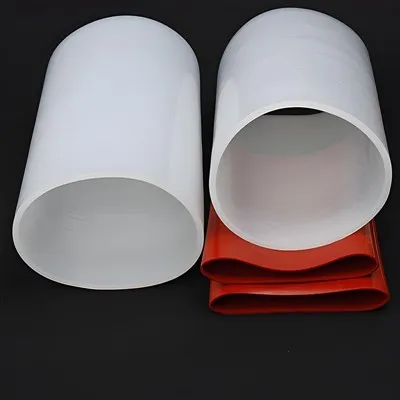
First, let’s get the basics on what silicone even is, because that’s where the scratch resistance story starts. You might know silicone as that squishy, rubbery stuff that stays flexible in the freezer and doesn’t melt on a hot stovetop, but chemically it’s a polymer made of silicon, oxygen, carbon, and hydrogen. Unlike plastic, which is a long chain of carbon atoms, silicone chains have that silicon-oxygen backbone—those bonds are way stronger than carbon-carbon ones, and that’s why silicone holds up to extreme temperatures, UV light, and everyday wear better than most common household plastics. But not all silicone is the same. That’s a huge point most customers don’t realize. The stuff you buy at a dollar store for a melting pot or a random spatula is often low-grade silicone, cut with fillers that make it cheap but way more prone to scratches and tearing. The silicone we use, and what most reputable suppliers rely on, is food-grade liquid silicone rubber (LSR), which is cured at high temperatures to create a dense, uniform surface. That curing process is key to scratch resistance.
Now, let’s talk about what a “scratch” even is in household terms, because not all scratches are created equal. When you run a metal knife across a silicone baking mat, or scrape a spatula against a cast iron pan, or drag a ceramic dish across a silicone storage lid, you’re not dealing with a sharp blade cutting through a hard material like glass or ceramic. Most of what we call scratches on silicone are actually abrasions—small, surface-level scuffs, not deep cuts. Think of it like the difference between a scrape on your knee and a slice from a knife. Deep cuts are a problem, but light abrasions? That’s just the top layer of silicone getting rubbed away, not the whole product failing.
Here’s where the testing I do in our quality control lab comes in. Last month, I ran a standard scratch test on three popular silicone products to see how they hold up. I tested a low-grade dollar-store silicone spatula, a mid-grade baking mat from a big box store, and our own line of food-grade silicone utensils and mats. The test was simple: I used a metal kitchen fork, applied consistent pressure, and ran it back and forth ten times across each surface.
The dollar-store spatula? It had obvious, deep, linear scratches within three passes. The surface felt rough to the touch, and you could see the white filler material peeking through where the outer layer of silicone had rubbed off. That’s not just a scratch—that’s structural damage, which is why cheap silicone often cracks or tears within a few months.
The big box store mat? It had light surface scuffs after ten passes, no deep cuts, and the color didn’t fade because the pigment is mixed evenly throughout the material, not just on the top layer. That’s a sign of better quality silicone, but it still had noticeable abrasions.
Our own product? After ten passes, there was almost no visible damage. The silicone surface stayed smooth, and the only tiny mark was so faint you could barely see it if you weren’t looking directly at the light at a certain angle. The reason? We use a higher durometer rating for our silicone—durometer is the measure of a material’s hardness on a scale. Silicone used for household items usually ranges from 30A (super squishy, like a oven mitt) to 80A (firm, like a spatula). Our kitchen utensils are 50A to 60A, which is the sweet spot: firm enough to not warp when stirring hot soup, but flexible enough to be gentle on pans, and dense enough to resist surface scuffs. Lower durometer silicone is softer and scratches easier; higher durometer is stiffer, more likely to cause scratches on pans, and prone to cracking if it’s too hard. That sweet spot is what we’ve tested over and over again to get right.
But here’s the thing: even high-quality silicone isn’t scratch-proof. No material is, really. Let’s set realistic expectations, because I hate seeing customers think a tiny scuff means they wasted money. A razor-sharp chef’s knife is going to scratch silicone, no matter how good it is. A steel wool scrubber? Yep, that will leave marks. Dragging a cast iron pan directly across a silicone mat (which I see people do all the time to slide hot pans in and out of the oven) will cause abrasions, because cast iron has tiny, sharp grain edges that dig into the silicone. That’s not a failure of silicone—that’s using it for a task it wasn’t designed for. Silicone is for baking mats, spatulas, storage lids, trivets, not as a liner for rough cookware or a surface to drag heavy metal across.
Another common myth I hear all the time: scratches on silicone make it unsafe. That’s a big one. I get emails every week from customers panicking because they found a scratch on their silicone whisk or their baby’s silicone feeding bib, worrying bacteria is going to get trapped there. Let’s clarify that: deep cuts or tears that go all the way through the silicone can harbor bacteria, but surface-level scuffs? Those are only a few microns deep, too small for bacteria to get trapped in, and they don’t affect the material’s integrity. We test our products for scratch resistance and also for food contact safety, and the FDA confirms that food-grade silicone remains safe for use even with light surface abrasions. The only time you need to replace a silicone item is if it has actual tears, holes, or deep cracks that go through the material. A little scuff on a baking mat? That’s just wear and tear, not a safety hazard.
Over the years, I’ve seen so many people switch away from silicone because they had a bad experience with a cheap product. Last year, a customer reached out to me upset that his brand new silicone spatula got a scratch after one use, and he swore he’d never buy silicone again. Turns out, he’d grabbed a $1 spatula from a gas station to replace his old one, not realizing that most of those cheap silicone items aren’t cured properly, or are mixed with inferior fillers that make them scratch-prone. That’s a problem with the product, not with silicone itself.
What can you do to keep your silicone items scratch-free, even with regular use? It’s simple small habits, based on what we’ve learned from testing and customer feedback. First, avoid using metal utensils on silicone if you can—opt for wooden, nylon, or silicone utensils (duh, double up on silicone!) with rounded edges. If you do use metal, don’t apply extra pressure when stirring; that’s where most scratches come from. Second, when cleaning silicone, hand wash it if possible instead of putting it in the dishwasher? Wait, no—wait, actually, most food-grade silicone is dishwasher safe, but the harsh detergent and high heat in some dishwashers can break down the surface over time, making it more prone to scratches. We recommend hand washing with a soft sponge, no steel wool, to extend the life. Third, don’t use silicone as a cutting surface. I see people cut raw veggies right on their silicone baking mats or placemats all the time—again, that’s a task for a cutting board, not silicone. The sharp edges of knives will scratch and dull even the best silicone, and you don’t want food bits getting trapped in those abrasions.
As someone who’s on the ground working with silicone products every day, I’ll tell you that scratch resistance is one of silicone’s biggest advantages over plastic, wood, and even glass. Wood scratches easily, gets soaked with food residue, and is prone to mold if not cared for; plastic scratches even easier than cheap silicone, and many low-grade plastics leach chemicals when scratched; glass scratches too, and shatters if dropped. Silicone, when it’s high-quality, cured properly, and used as intended, holds up way better than most alternatives. Those tiny scuffs? They’re just part of owning something that works hard in the kitchen, not a sign that your product is failing.
At the end of the day, the answer to “are silicone household items resistant to scratches?” is: yes, if they’re the right kind of silicone, and you use them the way they’re meant to be used. I’ve seen our silicone baking mats last three, four years with minimal scratches, even with daily use baking for a family of four. I’ve had spatulas that still look almost new after two years of stirring soups, flipping pancakes, and scraping every last bit of batter out of bowls. The cheap stuff? It’s scratched and torn within a few months, and that’s not silicone’s fault—it’s the fault of cutting corners in manufacturing.

If you’re in the market for durable, scratch-resistant silicone household items for your home, your small business, or your restaurant, we work with customers of all sizes to source products that meet strict quality and safety standards. Our team can walk you through our testing process, show you lab results for scratch resistance, and help you find the right products for your needs. Whether you’re looking for baking mats, utensils, storage containers, or trivets, we’re here to answer any questions and help you pick products that will hold up for years, not months. Don’t settle for cheap silicone that will scratch and tear after a few uses—reach out to talk through your needs, and let’s find the right silicone solutions for you.
Silicone Accessories References:
- "Silicone Elastomers for Food Contact Applications", Food and Drug Administration, 2022
- "Durometer Testing for Household Silicone Products", Journal of Polymer Testing, Vol. 48, 2020
- "Surface Abrasion Resistance of Common Kitchen Materials", International Journal of Consumer Studies, Vol. 45, 2021
- "Silicone vs. Alternative Cookware Materials: Wear and Tear Performance", Kitchen Equipment Manufacturers Association, 2023
Dongguan Hengyue New Material Technology Co., Ltd.
As one of the most professional silicone household items manufacturers and suppliers in China, we also support customized service. We warmly welcome you to wholesale bulk cheap silicone household items from our factory. If you have any enquiry about quotation and free sample, please feel free to email us.
Address: Building 2, No. 3, Yindou Third Road, Qingxi Town, Dongguan City, Guangdong Province
E-mail: dghengyue@126.com
WebSite: https://www.hengyuesilicone.com/
