If you’ve ever flipped through a glossy magazine, held a crisp product brochure, or stared at a vibrant poster that felt almost too sharp to be real, you’ve interacted with color offset paper—one of the workhorses of commercial printing that I’ve spent 12 years supplying to print shops, publishers, and branding teams across the Midwest. When customers first reach out to me asking about this paper, they usually assume it’s a fancy, mass-produced product that’s all the same. But after walking through our manufacturing facility and explaining every step, most leave surprised at how precise, intentional, and even labor-intensive each sheet of color offset paper is. Today, I want to pull back the curtain on how we make it—not just as a supplier who’s stood by as rolls of pulp get turned into finished stock, but as someone who’s spent years troubleshooting when a batch’s color density is off or a sheet tears mid-print run. Color Offset Paper
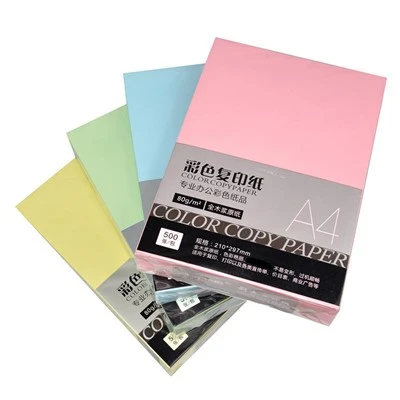
Color offset paper isn’t just “paper with color on it”—it’s engineered specifically for the offset lithography process, which relies on transferring ink from a rubber blanket to a sheet of paper, rather than directly pressing ink onto the surface. For this process to work without smudging, fading, or uneven color, the paper has to balance several competing properties: it needs to be smooth enough to let ink lay flat, absorb just enough ink to dry quickly (but not so much that colors get muddy), and be stable enough to not stretch or warp when it’s fed through high-speed offset presses that can crank out 10,000 sheets an hour. Getting that balance right is why we don’t cut corners in the manufacturing steps.
It all starts with the pulp, the raw material that makes up 90% of color offset paper. We source 100% virgin softwood and hardwood pulp from FSC-certified forests in the Great Lakes region—local, so we cut down on transportation emissions, and sustainable, so our customers can market their printed materials as eco-friendly if they choose. First, we break the big pulp bales down into small chunks, then cook them in a pressurized digester with a mild chemical solution (usually sodium hydroxide and sodium sulfide) to separate the cellulose fibers from the lignin that binds them together. This is called the kraft pulping process, and it’s gentle enough that we don’t damage the long softwood fibers, which give the paper strength, and the shorter hardwood fibers, which add smoothness.
After cooking, we wash the pulp to remove leftover chemicals and lignin—this is crucial because any residual lignin would cause the paper to yellow over time, which would ruin the crisp, long-lasting color our customers expect for annual reports, art books, or product packaging. Next, we bleach the pulp to a bright, consistent white using elemental chlorine-free (ECF) chemicals, which is standard now for responsible paper manufacturing. We test the brightness of the pulp every 15 minutes with a spectrophotometer; we target 85 to 90 brightness for our standard color offset stock, a sweet spot where it’s bright enough to make ink pop but not so unnaturally white that it’s harsh to look at.
Once the pulp is clean, bright, and separated into individual fibers, we mix it with water in a giant machine called a beater, which turns the thick pulp slurry into a thinner, more uniform mixture. This is where we add the key additives that make this paper ideal for offset printing—additives that I’ve tested and adjusted over the years to fix common issues. First, we add fillers like calcium carbonate, which makes the paper smoother and more opaque; without fillers, thin stock would let light through, making dark colors look dull. We also add sizing agents, usually alkyl ketene dimer (AKD), to control how much water the paper absorbs. Offset printing uses water-based fountain solutions to keep ink from sticking to non-print areas of the plate, so if the paper absorbs too much water, it swells and warps mid-run, leading to misaligned colors. AKD sizing ensures the paper’s moisture level stays consistent, even when exposed to fountain solution.
For specialty runs—like the extra-heavy stock we supply for luxury catalogs or the matte finish for art books—we add extra additives: for gloss stock, we add a small amount of synthetic resin to boost surface smoothness; for recycled content options (for customers who want that), we add starch to improve strength, since recycled fibers are shorter and weaker than virgin ones. This mixing step is where most of our custom work happens; if a customer comes to us needing paper that can hold ultra-vivid neon inks or heavy metallic foil, we’ll adjust the additive mix in the slurry to match those needs.
Next comes the paper machine, the biggest piece of equipment in our facility, stretching over 200 yards long and running 24/7 when we have a big order. The diluted pulp slurry (now 99.5% water, 0.5% fibers and additives) flows onto a moving wire mesh screen. Gravity pulls most of the water out, and vacuum suction boxes below the screen pull out even more, leaving a thin, wet sheet of paper that’s only 10% water. This sheet moves on to the press section, where large rubber rollers squeeze out the remaining water—hard enough to press the fibers together tightly, but not so hard that we flatten the fibers, which would make the paper weak.
Then comes the drying section, a series of huge steam-heated rollers that the paper sheet wraps around for several minutes, bringing its moisture level down to a precise 4-5%. That’s a critical number: if moisture is too high, the paper will stretch on offset presses and cause color misregistration (when cyan, magenta, yellow, and black lines don’t line up, leading to blurry images); if it’s too low, it will be brittle and tear. We test moisture levels every hour with a moisture meter, and if it’s off, we adjust the humidity in the drying room or slow down the machine.
Once the paper is dry, we move to the calendering section, where the sheet passes through a series of heated, polished steel rollers to create that super-smooth surface that’s essential for sharp offset prints. For gloss offset paper, we use more rollers and higher pressure to get a shiny, reflective surface that makes inks look deeper; for matte offset, we use softer rollers to create a subtle, non-reflective finish that’s easier to read for long documents. We also apply a light coating of starch or polymer here for extra smoothness, depending on the order.
Now we’re at the most important step for color offset: the color quality testing. We cut small test strips from the giant roll of paper, then send them through our in-house offset test press to print a standard color bar—small patches of cyan, magenta, yellow, black, and grayscale that let us check for consistent brightness, color density, and registration. We use a spectrophotometer to measure each color patch against ISO 12647-2, the global standard for commercial printing, to make sure the reds are the right tone, the blacks are deep, and there’s no unexpected tint. If a test strip is off, we’ll adjust the pulp mix or drying temperature before we run the full roll. For example, last quarter we had an order for a client’s annual report that needed a deep forest green; our initial test batch had a yellow undertone, so we added a tiny amount of blue dye to the pulp mix (a step we only take for specialty orders) and nailed it on the second try.
Once a roll passes testing, we wind it onto giant cores, then cut it to the exact size our customers order—from standard letter or A4 sheets to 30-inch wide rolls for large-format posters. We also trim the edges to a perfect, straight line; even a 1/32 of an inch uneven edge can cause jams in offset presses. We package the paper in moisture-resistant wrapping, then stack it on pallets with moisture barriers to keep it at the perfect 4-5% moisture level during shipping, no matter if it’s going to a print shop in Chicago or a packaging plant in Detroit.
I’ve been supplying color offset paper for long enough that I’ve seen trends come and go—from the shift to digital printing for small runs, which actually made our color offset paper more valuable for high-volume, long-lasting projects, to the demand for more sustainable stock, which pushed us to refine our virgin pulp sourcing and add recycled content lines. The biggest mistake I see new paper buyers make is choosing the cheapest paper they can find, only to run into problems: smudged ink, warped sheets that ruin a print run, colors that fade in six months. The difference between a low-grade offset paper and the high-quality stock we supply is in every step of the process—from the type of pulp we use to the precision testing we do before it leaves our facility.

If you’re planning a print project—whether it’s a product catalog, a brand’s promotional poster, or a company’s annual report—having the right color offset paper is half the battle. A great design and a skilled print team won’t fix paper that absorbs too much ink or warps mid-run. We work closely with print teams to match the paper to their specific needs, whether that’s a heavy stock for luxury packaging or a lightweight, eco-friendly option for a magazine. If you’re tired of dealing with inconsistent paper that messes up your print runs, or you’re looking for a reliable supplier that prioritizes quality and customization, we’d be happy to walk you through our stock options, answer questions about how our paper works, and help you find the perfect fit for your project. Reach out to us to learn more about our color offset paper and discuss your next print order.
Color Offset Paper References:
- TAPPI Standard T205 om-18, Preparation of Handsheets for Physical and Optical Testing
- ISO 12647-2:2013, Graphic technology — Process control for the production of half-tone colour separations, proof and production prints — Part 2: Offset lithographic processes
- Smook, G. A. (2019). Handbook of Graphic Communication: Principles and Practices (5th ed.). GATF Press
Dongguan Banyan Material Co., Ltd.
We are one of the most experienced color offset paper manufacturers and suppliers in China, also support customized service. Please feel free to wholesale bulk eco-friendly color offset paper from our factory. Quality products and reasonable price are available.
Address: NO.167, Meijing West Road, Songmushan, Dalang Town, Dongguan City, Guangdong Province, China
E-mail: Sales_chris@yspaper.com
WebSite: https://www.paperyoung.com/
