What are the design considerations for an AC DC High Voltage Divider?
As a supplier of AC DC high voltage dividers, I’ve had the privilege of delving deep into the intricacies of their design. These devices are crucial in a wide range of industries, from power generation and distribution to research laboratories and industrial testing facilities. In this blog, I’ll share the key design considerations that go into creating an efficient, reliable, and accurate AC DC high voltage divider. AC DC High Voltage Divider

1. Voltage Rating
One of the most fundamental design considerations is the voltage rating of the high voltage divider. This parameter determines the maximum voltage that the divider can safely handle without suffering from breakdown or insulation failure. When selecting the voltage rating, it’s essential to consider the worst – case scenarios in the application. For instance, in a power grid, transient overvoltages can occur due to lightning strikes or switching operations. A high – quality AC DC high voltage divider should be able to withstand these transient conditions without damage.
Manufacturers typically base the voltage rating on the long – term continuous operating voltage and add a safety margin to account for transient events. For example, if the expected continuous operating voltage in an application is 100 kV, a divider with a voltage rating of 120 kV or higher might be selected to ensure reliability. Higher voltage ratings also often require more robust insulation materials and larger physical dimensions to prevent flashovers and maintain electrical safety.
2. Accuracy and Precision
Accuracy and precision are critical for AC DC high voltage dividers, especially in applications where voltage measurements need to be highly reliable. Accuracy refers to how close the measured value is to the true value, while precision refers to the repeatability of the measurements.
To achieve high accuracy, several factors need to be considered. The resistive or capacitive components used in the divider must have stable electrical properties. For resistive dividers, the resistance values should have a low temperature coefficient, meaning that they change minimally with temperature variations. In capacitive dividers, the capacitance values need to be stable and not affected by factors such as humidity or mechanical vibrations.
Calibration is another essential aspect of ensuring accuracy. High – quality AC DC high voltage dividers are calibrated against known standards in a controlled environment. The calibration process should be performed regularly to account for any long – term drift in the electrical properties of the components.
3. Frequency Response
AC DC high voltage dividers are often used to measure both direct current (DC) and alternating current (AC) voltages. Different applications may require the divider to operate over a wide range of frequencies. For example, in power electronics applications, the frequency of the AC voltage can range from a few hertz to several megahertz.
The design of the high voltage divider needs to ensure a flat frequency response over the desired frequency range. This means that the voltage division ratio should remain constant regardless of the frequency of the input voltage. To achieve this, the internal components of the divider, such as resistors and capacitors, need to be carefully selected and configured. Parasitic effects, such as stray capacitance and inductance, can also affect the frequency response and need to be minimized during the design process.
4. Insulation and Dielectric Properties
Good insulation is essential for the safe and reliable operation of an AC DC high voltage divider. The insulation materials used in the divider must have high dielectric strength, which is the ability to withstand high voltages without breaking down. Common insulation materials include ceramic, glass, and certain types of polymers.
The insulation design also needs to take into account the environmental conditions in which the divider will operate. For example, in humid or corrosive environments, the insulation materials need to be resistant to moisture and chemical attack. The physical design of the divider, such as the shape and spacing of the electrodes, also plays a role in preventing surface flashovers and maintaining the integrity of the insulation.
5. Thermal Considerations
AC DC high voltage dividers can generate heat during operation, especially when handling high currents or in high – power applications. Excessive heat can cause the electrical properties of the components to change, leading to a decrease in accuracy and potentially causing damage to the divider.
To address thermal issues, the design should include proper heat dissipation mechanisms. This can involve the use of heatsinks, fans, or other cooling systems. The layout of the internal components should also be optimized to allow for efficient heat transfer. Additionally, the materials used in the divider should have good thermal conductivity to help spread the heat evenly.
6. Size and Form Factor
The size and form factor of the AC DC high voltage divider are also important design considerations. In some applications, such as mobile testing equipment or compact laboratory setups, a small and lightweight divider is preferred. However, as the voltage rating increases, it becomes more challenging to reduce the size of the divider while maintaining the necessary insulation and electrical performance.
Engineers need to strike a balance between the size requirements and the electrical properties of the divider. This may involve using advanced materials and manufacturing techniques to achieve a more compact design without sacrificing performance.
7. Electromagnetic Compatibility (EMC)
In modern electrical systems, electromagnetic interference (EMI) can be a significant problem. AC DC high voltage dividers need to be designed to have good electromagnetic compatibility to ensure that they do not generate excessive EMI and are not affected by external electromagnetic fields.
To achieve EMC, the design may include shielding to protect the internal components from external electromagnetic interference. The layout of the conductors and the grounding scheme of the divider also play an important role in reducing EMI. Additionally, the electrical components used in the divider should be selected to have low EMI generation characteristics.
8. Mechanical Robustness
AC DC high voltage dividers may be subject to mechanical stress during installation, transportation, and operation. The design should ensure that the divider is mechanically robust and can withstand vibrations, shocks, and other mechanical forces without damage.
This can involve using sturdy enclosures, secure mounting methods, and flexible internal connections to absorb mechanical stress. The materials used in the construction of the divider should also be chosen for their mechanical strength and durability.
Conclusion
Designing an AC DC high voltage divider is a complex process that requires careful consideration of multiple factors. From voltage rating and accuracy to thermal management and electromagnetic compatibility, each aspect plays a crucial role in ensuring the performance and reliability of the divider.
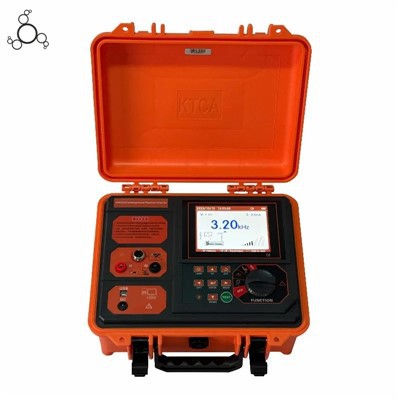
As a supplier of these essential devices, we understand the importance of meeting the diverse needs of our customers. Whether it’s a high – precision measurement application in a research lab or a rugged industrial environment, we are committed to providing AC DC high voltage dividers that are designed to the highest standards.
DC Withstand Voltage Test Equipment If you are interested in our AC DC high voltage dividers and would like to discuss your specific requirements or engage in procurement negotiations, please feel free to get in touch with us. We look forward to collaborating with you to find the best solution for your application.
References
- E. O. Doebelin, "Measurement Systems: Application and Design", McGraw – Hill, 2007
- R. D. Middlebrook, "Fundamentals of Power Electronics", Springer, 2001
- IEEE Std 4 – 2013, "IEEE Standard Techniques for High – Voltage Testing"
Wuhan Jiuhua Jingce Power Equipment Co., Ltd.
As one of the most experienced ac dc high voltage divider manufacturers in China, we offer a wide range of products with superior quality. Please feel free to wholesale bulk durable ac dc high voltage divider from our factory. For price consultation, contact us.
Address: 601,Unit 1,Building D4-02,Optics Valley Center,303 OpticsValley Avenue,Wuhan
E-mail: market@wuhanjhjc.com
WebSite: https://www.powertransformertester.com/
