Yo, what’s up! I’m a carriage bolt supplier, and today I wanna talk about the impact of vibration on carriage bolts. You might be thinking, "Vibration? How big of a deal can that be?" Well, let me tell you, it’s a pretty big deal, and I’ve seen firsthand how it can mess things up if you’re not careful. Carriage Bolt
Understanding Carriage Bolts First
Before we dive into the impact of vibration, let’s quickly go over what carriage bolts are. Carriage bolts are those bolts with a round, domed head and a square section under the head. The square section is there to prevent the bolt from turning when you’re tightening the nut on the other end. They’re used in a whole bunch of applications, from building decks and outdoor furniture to industrial machinery. The reason they’re so popular is that they’re pretty strong and can hold things together well, but that doesn’t mean they’re invincible, especially when it comes to vibration.
How Vibration Affects Carriage Bolts
Okay, so let’s get into the nitty – gritty of how vibration impacts carriage bolts.
Loosening
The most obvious effect of vibration is that it can cause the carriage bolts to loosen. When the machine or structure that the bolts are holding together vibrates, it creates a kind of shaking motion. This shaking can gradually work the nut loose from the bolt. You know how when you’re shaking a jar, and something inside starts to move around? It’s kind of the same thing. The constant movement of the vibration makes the threads of the nut and bolt start to slide against each other, and over time, the nut just keeps backing off.
I’ve had customers come to me complaining that the structures they’ve built with our carriage bolts are starting to come apart. When we investigated, it turned out that vibration was the culprit. For example, in a machine that has a lot of moving parts and shakes a lot during operation, the carriage bolts that are holding the different components together can start to loosen. If this isn’t caught in time, it can lead to some serious problems, like the machine breaking down or even causing an accident.
Wear and Tear
Vibration also causes wear and tear on the carriage bolts. As the bolts shake back and forth, the surfaces that are in contact, like the threads of the nut and bolt and the parts that the bolt is holding together, start to rub against each other. This rubbing can cause the metal to wear down. The threads can get damaged, which means the nut won’t fit as tightly on the bolt anymore. And if the wear is bad enough, the bolt can even break.
I once heard about a bridge where the carriage bolts used in some of the support structures were exposed to a lot of vibration from traffic. After a few years, they started to show signs of heavy wear. The threads were so worn that the bolts couldn’t hold the bridge components together as effectively as they should have. It’s a scary thought, right? But it just goes to show how important it is to consider the impact of vibration on carriage bolts.
Fatigue Failure
Another big issue is fatigue failure. When a carriage bolt is exposed to repeated vibration, it experiences stress cycles. Every time the bolt vibrates, there’s a little bit of stress put on it. Over a long period of time, these stress cycles can cause microscopic cracks to form in the bolt. Eventually, these cracks can grow and spread until the bolt breaks completely.
In industrial settings, where machines run 24/7 and generate a lot of vibration, fatigue failure of carriage bolts is a real concern. It can lead to costly downtime as the machine has to be shut down for repairs. And if the bolt breaks at the wrong time, it can cause damage to other parts of the machine as well.
Dealing with Vibration in Carriage Bolt Applications
So, what can we do to deal with the impact of vibration on carriage bolts?
Locking Mechanisms
One of the most common solutions is to use locking mechanisms. There are a few different types. Lock washers are a popular choice. They work by creating a spring – like tension between the nut and the surface it’s being tightened against. This tension helps to keep the nut from loosening due to vibration. There are also nylon – insert lock nuts. These nuts have a nylon ring inside them that grips the bolt threads tightly, preventing the nut from backing off.
I always recommend to my customers that they consider using these locking mechanisms when they’re using carriage bolts in applications where there’s a lot of vibration. It’s a relatively simple and inexpensive way to prevent a whole lot of headaches down the road.
Proper Installation
Proper installation is also crucial. When you’re tightening the nut on a carriage bolt, you need to make sure you’re using the right torque. If the bolt isn’t tightened enough, it’s more likely to loosen due to vibration. But if you over – tighten it, you can damage the threads or even break the bolt. So, it’s a delicate balance.
You also need to make sure that the surfaces where the bolt and nut are in contact are clean and smooth. Any dirt, debris, or roughness can affect how well the bolt holds up under vibration.
Real – World Examples and Case Studies
I wanna share a couple of real – world examples to show you just how important it is to deal with vibration in carriage bolt applications.
One of my customers was building a large outdoor play structure. They used our carriage bolts to assemble the different parts. At first, everything seemed fine, but after a few weeks, they noticed that some of the bolts were starting to loosen. The play structure was in a high – traffic area, and the constant movement of kids on it was causing a lot of vibration.
We recommended that they use lock washers on all the carriage bolts. They followed our advice, and after that, they didn’t have any more problems with the bolts loosening. It just goes to show that a simple solution can make a big difference.
Another example is from an industrial customer. They had a conveyor belt system that was using carriage bolts to hold some of the components together. The conveyor belt vibrated a lot during operation, and they were constantly having to replace the carriage bolts because they kept breaking due to fatigue failure.
We worked with them to come up with a better solution. We recommended using a higher – grade of carriage bolts that were more resistant to fatigue and also using locking nuts. After making these changes, the frequency of bolt replacements dropped significantly, and they saved a lot of money on maintenance.
Conclusion and Call to Action
In conclusion, vibration can have a major impact on carriage bolts. It can cause them to loosen, wear out, and even break. But by using the right locking mechanisms and ensuring proper installation, you can minimize these effects and make your carriage bolt applications more reliable.
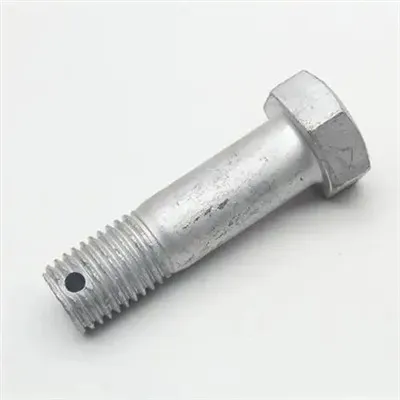
Hex Bolt If you’re in the market for carriage bolts or have any questions about dealing with vibration in your projects, don’t hesitate to reach out. I’m here to help you find the right solutions for your specific needs. Whether you’re building a small DIY project or a large industrial structure, I’ve got the knowledge and the products to support you. Let’s have a chat and see how we can work together to make your project a success.
References
- Machinery’s Handbook: A comprehensive guide to mechanical engineering, which includes information on fasteners and how they are affected by various forces, including vibration.
- Fastener Technology International: A magazine that often publishes articles on the latest research and best practices related to fasteners, including carriage bolts and their performance under different conditions.
Jiaxing Jinling Hardware Technolgy Joint Stock Co., Ltd.
As one of the most experienced carriage bolt manufacturers and suppliers in China, we also support customized service. Please feel free to buy bulk high-grade carriage bolt made in China here from our factory. For quotation and price list, contact us now.
Address: No.32, Shenjiadai, Xuyouche Village, Qinshan Subdistrict, Haiyan County, Zhejiang Province, China
E-mail: jlzxl@jinlingfstn.com
WebSite: https://www.china-nut-factory.com/
