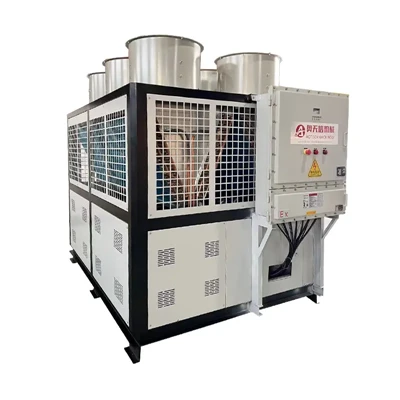
In the dynamic landscape of commercial and industrial cooling solutions, choosing between screw chillers and absorption chillers is a critical decision that can significantly impact operational efficiency, cost, and environmental footprint. As a trusted supplier of screw chillers, I have witnessed firsthand the diverse requirements that businesses have when it comes to cooling systems. In this blog post, I aim to provide an in – depth comparison of screw chillers and absorption chillers, highlighting the unique strengths and limitations of each to help you make an informed choice for your specific needs. Screw Chillers
How They Work
Let’s start by understanding the fundamental working principles of these two types of chillers.
Screw chillers operate on the vapor – compression refrigeration cycle. These chillers use a pair of interlocking helical rotors, known as screws, to compress the refrigerant gas. As the rotors turn, the volume between them decreases, causing the refrigerant to be compressed. The high – pressure, high – temperature refrigerant then releases heat in the condenser, where it condenses into a liquid. This liquid refrigerant then passes through an expansion valve, where its pressure drops, and it evaporates in the evaporator, absorbing heat from the water or air and providing the cooling effect.
On the other hand, absorption chillers work based on the principle of absorption refrigeration. They use a heat source, such as steam, hot water, or natural gas, to drive the cooling process instead of an electric compressor. In an absorption chiller, a refrigerant (usually water) is absorbed by a absorbent (commonly lithium bromide). The heat source then drives the refrigerant out of the absorbent in the generator. The refrigerant vapor then condenses in the condenser, releases heat, passes through an expansion valve, and evaporates in the evaporator to provide cooling. The absorbent is then recycled back to absorb more refrigerant.
Energy Efficiency
Energy efficiency is a top concern for many businesses, not only from a cost – saving perspective but also in terms of environmental impact.
Screw chillers are known for their high – efficiency operation in part – load conditions. Most commercial and industrial facilities do not operate at full capacity all the time. Screw chillers can adjust the compressor’s speed and capacity to match the actual cooling load, which results in significant energy savings. Electric motor – driven screw compressors have also become more efficient over the years, with improvements in motor design and control systems. However, the overall energy efficiency of screw chillers is highly dependent on the electricity grid’s energy source. If the electricity is generated from fossil – fuels, the carbon footprint may be relatively high.
Absorption chillers, on the other hand, are ideal when there is a readily available waste heat source. For example, in industrial processes or power plants where large amounts of waste heat are produced, absorption chillers can use this heat to generate cooling, effectively recycling the waste energy. This can significantly reduce the overall energy consumption and carbon footprint of the facility. However, absorption chillers are typically less efficient in terms of coefficient of performance (COP) compared to screw chillers when they are operating with a purchased heat source, such as natural gas.
Initial and Operating Costs
The upfront cost is often a major factor in the decision – making process.
Screw chillers generally have a lower initial cost compared to absorption chillers. The manufacturing process of screw chillers is more streamlined, and the components are widely available, which helps keep the costs down. In addition, installation of screw chillers is often straightforward, further reducing the initial investment.
In terms of operating costs, as mentioned earlier, screw chillers are energy – efficient under part – load conditions, but their operating costs are strongly tied to electricity prices. In regions where electricity is expensive, the operational cost of screw chillers can be relatively high. Absorption chillers, if using a waste – heat source, can have very low operating costs since they utilize otherwise wasted energy. But if they rely on a paid heat source like natural gas, the cost can vary depending on the gas prices. Maintenance costs also differ. Screw chillers have relatively simple mechanical systems, which generally result in lower maintenance costs and less frequent servicing. Absorption chillers, with their more complex chemical processes and the need to monitor the refrigerant – absorbent mixture, may require more specialized maintenance and higher maintenance costs.
Cooling Capacity and Range
The cooling capacity requirements of different applications vary widely.
Screw chillers are available in a wide range of cooling capacities, typically from 100 to 5000 tons of refrigeration. This makes them suitable for a vast array of applications, from small commercial buildings to large industrial complexes. They can provide precise temperature control and are capable of handling both small – scale and large – scale cooling demands effectively.
Absorption chillers are also available in a range of capacities, but they are often more commonly used for large – scale applications. Their larger capacity models can provide significant cooling for large institutions, district cooling systems, and industrial plants. However, the smaller capacity absorption chillers may not be as cost – effective or efficient as screw chillers in smaller commercial facilities.
Environmental Impact
Environmental considerations are becoming increasingly important in the choice of cooling systems.
Screw chillers usually use synthetic refrigerants, such as hydrofluorocarbons (HFCs). While modern HFC refrigerants have a lower ozone – depletion potential (ODP) compared to older refrigerants like chlorofluorocarbons (CFCs) and hydrochlorofluorocarbons (HCFCs), they still have a relatively high global – warming potential (GWP). There is a growing trend towards using low – GWP refrigerants in screw chillers to reduce their environmental impact.
Absorption chillers, especially those using water as the refrigerant, have a much lower environmental impact in terms of ozone depletion and global warming. Since they can use waste heat as an energy source, they also contribute to reducing overall greenhouse gas emissions from the energy generation sector.
Reliability and Durability
Reliability is crucial for any cooling system, as downtime can lead to significant losses in business operations.
Screw chillers are known for their reliability. The simple and robust design of the screw compressor, with fewer moving parts compared to some other types of compressors, reduces the risk of mechanical failures. The motors and control systems of screw chillers are also well – developed and have a long service life. Regular maintenance and proper operation can ensure that screw chillers operate continuously for many years.
Absorption chillers are generally reliable as well, but they require more careful monitoring of the internal chemical processes. Issues such as corrosion in the system, crystallization of the absorbent, or improper refrigerant – absorbent ratios can affect the performance and reliability of absorption chillers. Proper training and maintenance procedures are essential to ensure the long – term reliability of absorption chillers.
Noise and Space Requirements
Noise can be a significant concern, especially in applications where the chiller is installed near occupied areas.
Screw chillers, especially those with well – designed enclosures and advanced compressor technology, can operate relatively quietly. The noise level is mainly determined by the compressor and the fans. However, in some cases, additional noise – reduction measures may be required when the chiller is installed in noise – sensitive locations.
Absorption chillers typically produce less mechanical noise compared to screw chillers because they do not have a high – speed compressor. However, they may require larger amounts of space due to the complexity of their internal components and the need for additional equipment related to the heat source and the absorption process.
Conclusion
In conclusion, both screw chillers and absorption chillers have their own unique advantages and disadvantages. The choice between the two depends on various factors such as energy availability, cost, cooling capacity requirements, and environmental concerns.
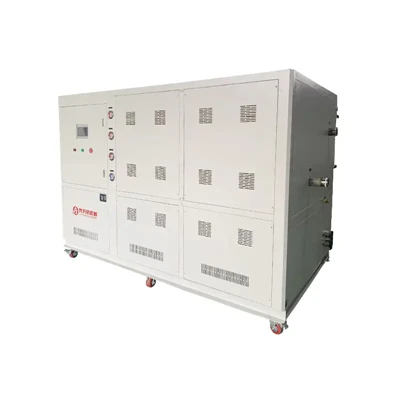
As a screw chiller supplier, I believe that screw chillers offer a great combination of efficiency, cost – effectiveness, and flexibility. They are suitable for a wide range of applications, especially when precise temperature control and part – load operation are important. The continuous improvements in technology have made screw chillers even more energy – efficient and reliable.
Screw Chillers If you are considering a new cooling system for your business, I encourage you to reach out to discuss your specific requirements. Our team of experts is ready to provide you with detailed information about our screw chillers, help you evaluate your options, and offer customized solutions to meet your cooling needs. Whether it’s for a small commercial building or a large industrial facility, we are committed to providing high – quality screw chillers and excellent customer service.
References
- ASHRAE Handbook – HVAC Systems and Equipment. American Society of Heating, Refrigerating and Air – Conditioning Engineers.
- "Refrigeration and Air – Conditioning" by William C. Turner.
- Technical documents from major chiller manufacturers regarding screw and absorption chillers.
Kunshan Aotianxin Machinery Co., Ltd.
We’re well-known as one of the most reliable screw chillers manufacturers in China. With abundant experience, our factory offer high quality screw chillers made in China with low price. If you have any enquiry about quotation and free sample, please feel free to email us.
Address: 550 Shengguang Road, Bacheng Town, Kunshan City, Jiangsu Province
E-mail: 1516722561@qq.com
WebSite: https://www.atxks.com/
