As a supplier of polyurethane shock absorbers, I’ve witnessed firsthand the remarkable adaptability of these components to different vibration frequencies. Polyurethane shock absorbers are widely used in various industries, from automotive to industrial machinery, due to their excellent performance and versatility. In this blog, I’ll delve into the science behind how polyurethane shock absorbers adapt to different vibration frequencies and why they are an ideal choice for many applications. Polyurethane Shock Absorber
Understanding Vibration Frequencies
Before we explore how polyurethane shock absorbers adapt to different vibration frequencies, it’s essential to understand what vibration frequencies are. Vibration frequency refers to the number of oscillations or cycles a vibrating object completes in a given time, usually measured in hertz (Hz). Different sources of vibration, such as engines, motors, or moving machinery, generate vibrations at various frequencies. These frequencies can range from low-frequency vibrations, typically below 100 Hz, to high-frequency vibrations, which can exceed 1000 Hz.
Low-frequency vibrations are often associated with large-scale movements, such as the motion of heavy machinery or the swaying of buildings. These vibrations can cause discomfort, structural damage, and even affect the performance of equipment. High-frequency vibrations, on the other hand, are usually caused by fast-moving components, such as rotating shafts or high-speed motors. These vibrations can lead to noise, wear and tear, and reduced efficiency.
The Properties of Polyurethane
Polyurethane is a versatile material that offers several properties that make it suitable for shock absorption. One of the key properties of polyurethane is its viscoelasticity. Viscoelastic materials exhibit both viscous and elastic behavior. When a force is applied to a viscoelastic material, it deforms gradually, absorbing energy in the process. When the force is removed, the material returns to its original shape, releasing the stored energy.
This viscoelastic behavior allows polyurethane shock absorbers to adapt to different vibration frequencies. At low frequencies, the polyurethane material deforms more slowly, absorbing the energy of the vibration over a longer period. This helps to reduce the amplitude of the vibration and prevent damage to the equipment. At high frequencies, the polyurethane material deforms more quickly, dissipating the energy of the vibration more rapidly. This helps to reduce the noise and wear associated with high-frequency vibrations.
Another important property of polyurethane is its high damping capacity. Damping refers to the ability of a material to dissipate energy when it is subjected to vibration. Polyurethane has a high damping capacity, which means it can effectively absorb and dissipate the energy of vibrations, reducing their amplitude and frequency. This makes polyurethane shock absorbers highly effective in reducing the impact of vibrations on equipment and structures.
How Polyurethane Shock Absorbers Adapt to Different Vibration Frequencies
The adaptability of polyurethane shock absorbers to different vibration frequencies is primarily due to their viscoelastic properties. When a shock absorber is subjected to a vibration, the polyurethane material deforms in response to the applied force. The rate of deformation depends on the frequency of the vibration.
At low frequencies, the polyurethane material has more time to deform, allowing it to absorb the energy of the vibration gradually. The material acts like a spring, storing the energy of the vibration and releasing it slowly over time. This helps to reduce the amplitude of the vibration and prevent it from causing damage to the equipment.
At high frequencies, the polyurethane material deforms more quickly, dissipating the energy of the vibration more rapidly. The material acts like a damper, converting the energy of the vibration into heat and dissipating it into the surrounding environment. This helps to reduce the noise and wear associated with high-frequency vibrations.
In addition to their viscoelastic properties, the design of polyurethane shock absorbers also plays a crucial role in their ability to adapt to different vibration frequencies. Shock absorbers can be designed with different geometries, such as cylindrical, conical, or rectangular, to optimize their performance for specific applications. The shape and size of the shock absorber can affect its stiffness, damping capacity, and natural frequency, which in turn can influence its ability to absorb and dissipate vibrations at different frequencies.
Applications of Polyurethane Shock Absorbers
Polyurethane shock absorbers are used in a wide range of applications, including automotive, industrial, and aerospace. In the automotive industry, polyurethane shock absorbers are used in suspension systems to reduce the impact of road vibrations on the vehicle. They help to improve ride comfort, handling, and stability, while also reducing wear and tear on the vehicle’s components.
In the industrial sector, polyurethane shock absorbers are used in machinery and equipment to reduce the impact of vibrations on the system. They help to improve the performance and reliability of the equipment, while also reducing noise and vibration levels in the workplace. Polyurethane shock absorbers are commonly used in applications such as conveyor systems, pumps, compressors, and generators.
In the aerospace industry, polyurethane shock absorbers are used in aircraft and spacecraft to reduce the impact of vibrations and shocks during flight. They help to protect the sensitive equipment and components on board, while also improving the comfort and safety of the passengers.
Advantages of Polyurethane Shock Absorbers
There are several advantages to using polyurethane shock absorbers over other types of shock absorbers. One of the main advantages is their excellent performance at different vibration frequencies. Polyurethane shock absorbers can effectively absorb and dissipate vibrations at both low and high frequencies, making them suitable for a wide range of applications.
Another advantage of polyurethane shock absorbers is their durability. Polyurethane is a strong and resilient material that can withstand repeated cycles of deformation and stress without losing its properties. This makes polyurethane shock absorbers highly reliable and long-lasting, reducing the need for frequent replacement.
Polyurethane shock absorbers are also relatively easy to install and maintain. They can be designed to fit a variety of applications and can be easily integrated into existing systems. Additionally, polyurethane shock absorbers require minimal maintenance, which helps to reduce downtime and operating costs.
Conclusion
In conclusion, polyurethane shock absorbers are an excellent choice for applications that require effective shock absorption at different vibration frequencies. Their viscoelastic properties, high damping capacity, and versatility make them suitable for a wide range of industries and applications. Whether you’re looking to improve the ride comfort of your vehicle, reduce the impact of vibrations on your industrial equipment, or protect the sensitive components on your aircraft, polyurethane shock absorbers can provide the solution you need.
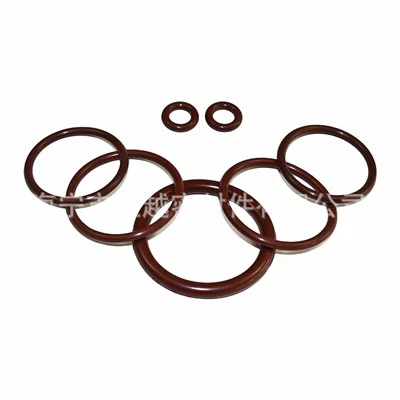
Polyurethane O Ring If you’re interested in learning more about our polyurethane shock absorbers or would like to discuss your specific requirements, please feel free to contact us. Our team of experts is ready to assist you in finding the right shock absorber for your application.
References
- "Polyurethane Elastomers: Science and Technology" by K. C. Frisch and D. Klempner.
- "Vibration Damping of Polyurethane Materials" by J. M. Julian and J. A. Sauer.
- "Shock and Vibration Handbook" by C. M. Harris and C. E. Crede.
Haining Chaoyue Seals Co., Ltd.
As one of the most professional polyurethane shock absorber manufacturers and suppliers in China, we offer a wide range of products with superior quality. Please feel free to wholesale high quality polyurethane shock absorber made in China here from our factory. Also, custom service is available.
Address: Building 9, 158 Lianhong Road, Yuanhua Town, Jiaxing, Zhejiang, China.
E-mail: chaoyue@cyseals.com
WebSite: https://www.hncyseal.com/
