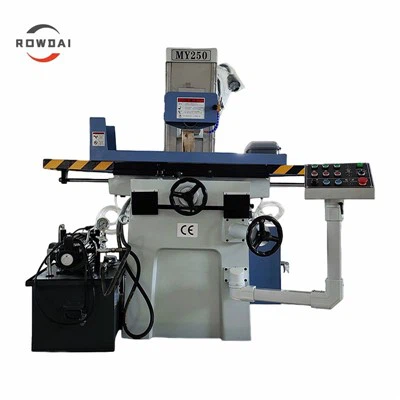
As a supplier of compound grinding machines, I often encounter inquiries from customers about the suitability of our machines for grinding thin – walled workpieces. This topic is of great significance as thin – walled workpieces are widely used in various industries, such as aerospace, automotive, and electronics. In this blog, I will delve into the feasibility of using a compound grinding machine for grinding thin – walled workpieces, exploring the advantages, challenges, and solutions. Compound Grinding Machine
Advantages of Using a Compound Grinding Machine for Thin – Walled Workpieces
Precision Grinding
Compound grinding machines are designed to offer high – precision grinding capabilities. They can achieve extremely tight tolerances, which is crucial for thin – walled workpieces. These workpieces often have strict dimensional requirements due to their applications in high – tech industries. For example, in aerospace components, thin – walled parts need to have precise dimensions to ensure proper fit and function within the overall structure. A compound grinding machine can use multiple grinding wheels and advanced control systems to achieve the required precision, ensuring that the thin – walled workpieces meet the exact specifications.
Versatility
One of the key features of a compound grinding machine is its versatility. It can perform different types of grinding operations, such as surface grinding, cylindrical grinding, and internal grinding. This is beneficial for thin – walled workpieces, which may require multiple grinding processes to achieve the desired shape and finish. For instance, a thin – walled cylindrical part may need both external and internal grinding. A compound grinding machine can handle these different operations in a single setup, reducing the time and cost associated with transferring the workpiece between different machines.
Surface Finish
The surface finish of thin – walled workpieces is of utmost importance. A good surface finish not only enhances the aesthetic appearance of the part but also improves its performance and durability. Compound grinding machines can produce a smooth and uniform surface finish on thin – walled workpieces. They can use different grinding wheel materials and grinding parameters to achieve the desired surface roughness. This is especially important for thin – walled parts used in applications where friction and wear are critical factors, such as in automotive engines.
Challenges in Grinding Thin – Walled Workpieces
Deformation
One of the major challenges in grinding thin – walled workpieces is deformation. Due to their thin structure, these workpieces are more susceptible to deformation caused by the grinding forces. The heat generated during the grinding process can also lead to thermal expansion and subsequent deformation. For example, if the grinding pressure is too high, the thin – walled workpiece may bend or warp, resulting in dimensional inaccuracies.
Vibration
Vibration is another issue that can affect the quality of grinding thin – walled workpieces. The high – speed rotation of the grinding wheel can cause vibrations, which can be transmitted to the workpiece. These vibrations can lead to uneven grinding, surface roughness, and even cracks in the thin – walled workpiece. Moreover, the resonance of the workpiece at certain frequencies can exacerbate the vibration problem.
Heat Generation
As mentioned earlier, heat generation during grinding is a significant concern for thin – walled workpieces. The heat can cause thermal stress, which may lead to micro – cracks and reduced material strength. Additionally, excessive heat can cause the workpiece to expand, making it difficult to maintain the required dimensions.
Solutions to Overcome the Challenges
Reducing Grinding Forces
To minimize deformation, it is essential to reduce the grinding forces. This can be achieved by using appropriate grinding parameters, such as lower grinding wheel speeds and feed rates. Additionally, using a grinding wheel with a suitable grain size and bond type can also help reduce the grinding forces. For example, a fine – grained grinding wheel can provide a smoother grinding action and reduce the pressure on the thin – walled workpiece.
Vibration Damping
To address the vibration issue, vibration damping techniques can be employed. This can include using vibration – absorbing materials in the machine structure or implementing active vibration control systems. For instance, some compound grinding machines are equipped with sensors that can detect vibrations and adjust the grinding parameters in real – time to minimize the impact of vibrations on the workpiece.
Cooling and Lubrication
To manage heat generation, effective cooling and lubrication systems are necessary. A coolant can be used to remove the heat generated during grinding and reduce the thermal stress on the thin – walled workpiece. The coolant also helps to flush away the grinding chips, preventing them from causing scratches on the workpiece surface. Different types of coolants, such as water – based and oil – based coolants, can be selected depending on the material of the workpiece and the grinding process.
Case Studies
Let’s take a look at some real – world examples of using compound grinding machines for grinding thin – walled workpieces. In the aerospace industry, a company was manufacturing thin – walled turbine blades. These blades had complex shapes and strict dimensional requirements. By using a compound grinding machine, they were able to achieve the required precision and surface finish. The machine’s versatility allowed them to perform multiple grinding operations in one setup, reducing the production time and cost.
In the automotive industry, a manufacturer was producing thin – walled engine components. The compound grinding machine helped them overcome the challenges of deformation and vibration. By carefully adjusting the grinding parameters and using a suitable coolant, they were able to produce high – quality thin – walled parts with excellent dimensional accuracy and surface finish.
Conclusion

In conclusion, a compound grinding machine can indeed be used for grinding thin – walled workpieces. It offers many advantages, such as precision grinding, versatility, and good surface finish. However, there are also challenges, such as deformation, vibration, and heat generation, that need to be addressed. By implementing appropriate solutions, such as reducing grinding forces, damping vibrations, and using effective cooling and lubrication systems, these challenges can be overcome.
Cylindrical Grinding Machine If you are in the market for a compound grinding machine for grinding thin – walled workpieces, we are here to help. Our compound grinding machines are designed with the latest technology and features to ensure high – quality grinding results. We have a team of experts who can provide you with professional advice and support. Contact us to start a procurement discussion and find the best solution for your grinding needs.
References
- Smith, J. (2018). Precision Grinding Techniques for Thin – Walled Components. Manufacturing Technology Journal.
- Johnson, A. (2019). Vibration Analysis and Control in Grinding Operations. Journal of Machine Tools and Manufacture.
- Brown, C. (2020). Cooling and Lubrication in Grinding Processes. Industrial Lubrication and Tribology.
Henan Rowdai Machinery Equipment Co., Ltd.
As one of the most professional compound grinding machine manufacturers in China, we’re featured by quality products and good price. Please rest assured to buy high-grade compound grinding machine for sale here from our factory. If you have any enquiry about cooperation, please feel free to email us.
Address: Building 9, E-Commerce Industrial Park, High-Tech Zone, Zhengzhou, Henan, China
E-mail: rowdai@rowdai.com
WebSite: https://www.rowdai.com/
